
/White%20Papers/2024_1_WP%20-%20Flexible%20Power%20and%20Energy%20Systems/SEW_PES-WP_ASRS_6385_19_2400x800.jpg)

Where Performance and Energy Intersect
In industrial automation, we tend to think in terms of speed, throughput, and mechanical performance. But there’s a less visible force shaping all of it, one that directly impacts cost, efficiency, and system reliability. It’s energy.
Not just how much you use, but how you manage it.
Because in modern manufacturing, energy isn’t just consumed. It’s generated, stored, and reused in ways that can either limit performance or unlock it.
The Hidden Driver of System Efficiency
At its core, power and energy management is about balance.
Every automated system experiences constant fluctuations: acceleration spikes, braking events, idle periods. Traditional systems treat these as isolated moments. Energy is pulled from the grid when needed and dissipated as heat when it’s not.
But that approach leaves efficiency on the table.
During braking, energy is generated. In conventional systems, it’s burned off through resistors, converted into heat, and lost. At the same time, startup and acceleration demand large bursts of power, forcing systems to be designed around peak loads rather than average demand.
The result:
- Oversized infrastructure
- Higher energy costs
- Increased strain on the grid
And most importantly, a system that’s working harder than it needs to.
The Myth of “Energy In = Energy Out”
One of the most common assumptions in industrial systems is that energy flow is linear. You draw power, you use it, and it’s gone. But real-world operation is far more dynamic.
Energy is constantly being created and released within the system itself, especially in applications with frequent starts, stops, lifting, or deceleration. The question isn’t just how much energy you consume, but what happens to it in between.
Without a strategy, that energy is wasted.
With the right approach, it becomes a resource.
Peak Power: The Silent Cost Driver
Among all energy challenges, peak demand is one of the most overlooked.
Short bursts of high power, during startup or acceleration, drive disproportionate costs. They dictate:
- Cable sizing
- Power supply requirements
- Control cabinet design
- Utility demand charges
In many cases, systems are engineered around these peaks, even though they occur for only a fraction of the operating cycle.
That’s why two systems performing the same task can have drastically different energy footprints depending on how those peaks are handled.
Reduce the peaks, and you reduce everything connected to them.
Rethinking Energy: From Waste to Resource
Modern power and energy management systems take a different approach.
Instead of dissipating excess energy, they capture and reuse it.
Energy generated during braking is stored, typically in capacitor-based systems, and then made available when the system needs it most, such as during acceleration or high-load events. A shared DC link allows this energy to move where it’s needed, stabilizing the entire system.
The impact is immediate:
- Reduced peak power demand
- Smoother energy flow
- Less reliance on the supply grid
In effect, the system begins to reuse its own energy.
Designing Around Average Power, Not Peak Demand
This shift changes how systems are designed.
When peak loads are managed internally, engineers no longer need to size infrastructure for worst-case scenarios. Instead, they can design around average power requirements.
That translates into:
- Smaller cables and electrical components
- Reduced installation costs
- More compact control cabinets
In some applications, systems that once required large grid connections can operate on a fraction of that power.
It’s not just an efficiency gain, it’s a design advantage.
From Efficiency to Resilience
Energy management doesn’t just improve efficiency; it improves reliability.
Stored energy within the system can act as a short-term buffer during power disturbances. In the event of an outage, that energy can be used to:
- Maintain critical control functions
- Bring systems to a controlled stop
- Prevent damage or product loss
This capability turns energy storage into a form of operational insurance.
From Monitoring to Insight
Modern systems integrate energy monitoring directly into the hardware, providing real-time insight into:
- Power consumption
- Load profiles
- Energy flow within the system
This data supports broader energy management strategies and helps operators identify inefficiencies, anomalies, or emerging issues before they become problems.
The question shifts from “How much energy are we using?” to “How well are we using it?”
From Fixed Systems to Scalable Solutions
No two applications are identical, and energy management needs to reflect that.
Modular systems allow energy storage and power handling to scale across a wide range of applications, from small machines to large, high-power operations.
Different operating modes can be configured depending on the need:
- Reducing peak power
- Maximizing energy storage
- Supporting short-term or extended power interruptions
This flexibility makes energy management adaptable, not fixed.
Partnering for Smarter Energy Use
At SEW-EURODRIVE, power and energy management is not treated as an add-on; it’s part of the system design.
We work with customers to:
- Optimize energy usage at the application level
- Reduce peak demand and infrastructure costs
- Implement solutions that improve both efficiency and reliability
Because energy performance isn’t just about consumption.
It’s about control.
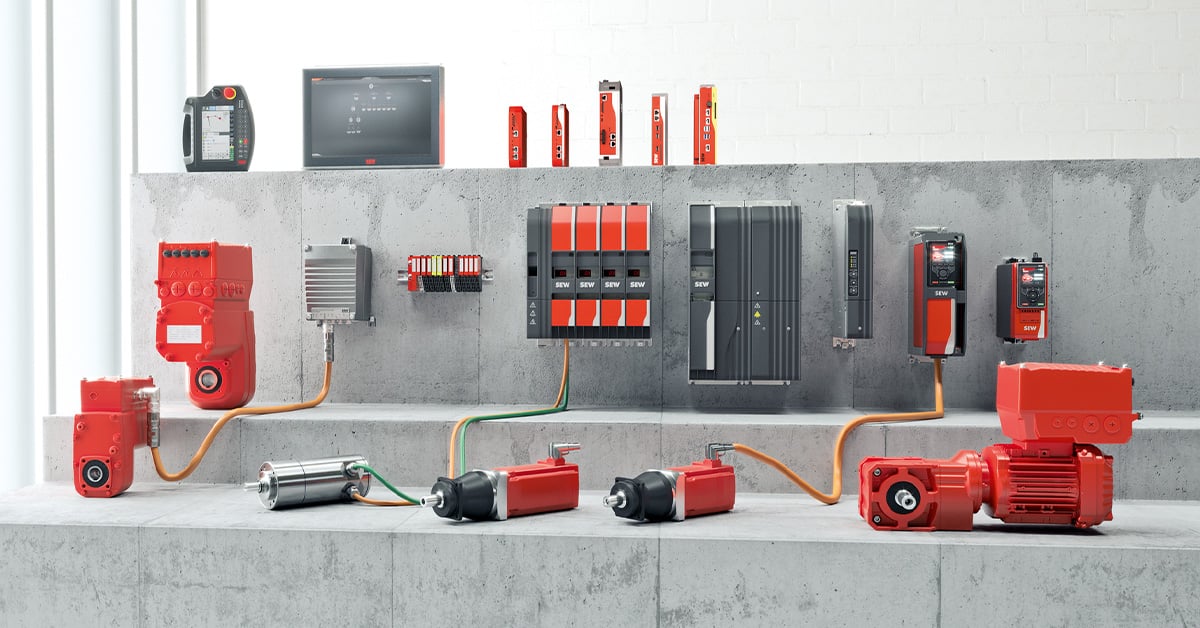
A Shift Toward Energy-Aware Manufacturing
Modern factories are under increasing pressure to do more with less, such as more throughput with less energy and more flexibility with less cost. Meeting those demands requires a new perspective. Energy is no longer just an input. It’s a variable that can be managed, optimized, and leveraged to improve overall system performance. The operations that recognize this shift won’t just reduce energy costs. They’ll build systems that are more efficient, more resilient, and better prepared for what comes next.
 About the Expert
Jeremy McCullough is a Senior Engineer at SEW-EURODRIVE USA. He holds a B.S. in Electrical Engineering from Clemson University and brings a strong technical background in intelligent systems, embedded programming, and control systems.
