
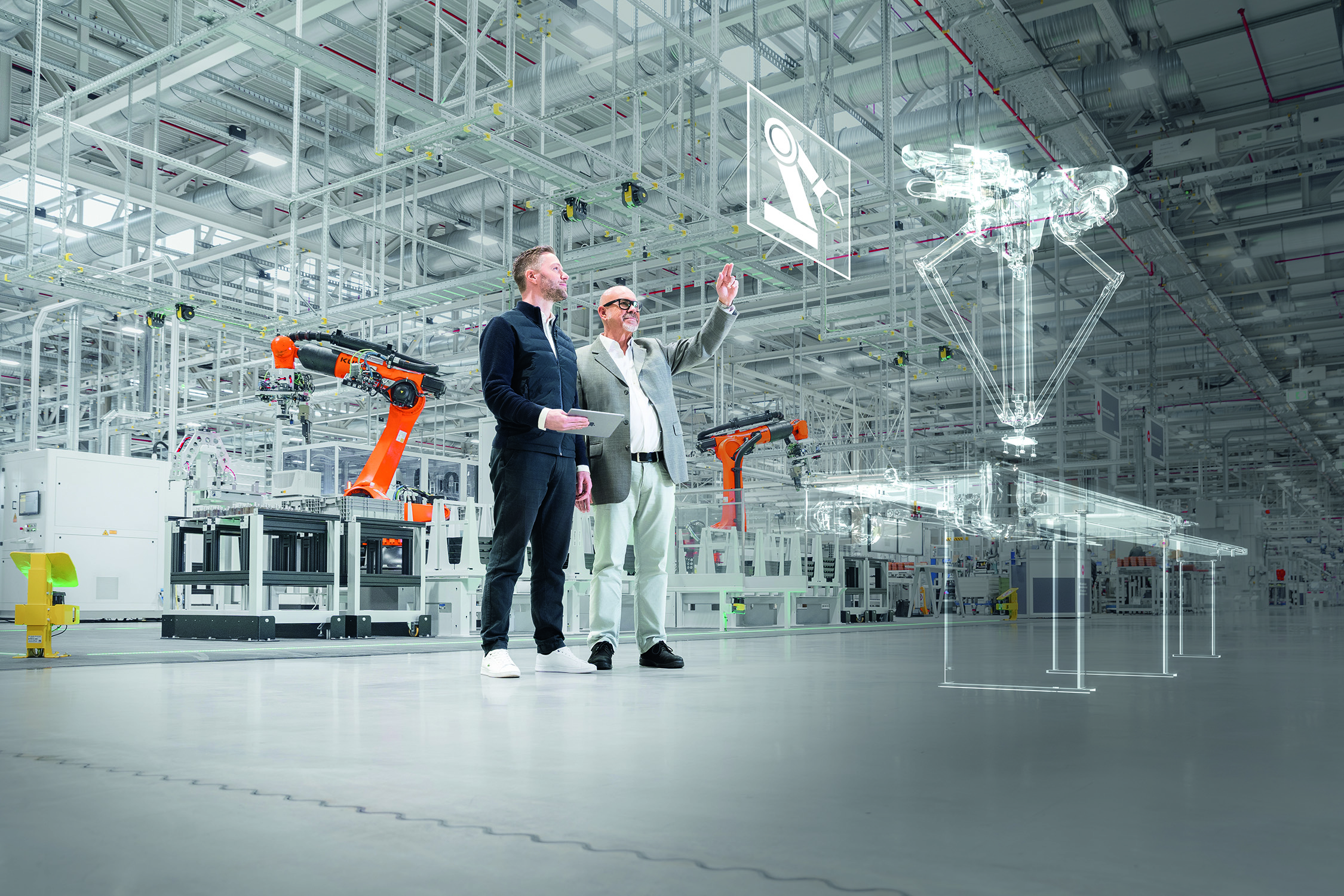

How Automation is Reshaping Modern Manufacturing
Automation has evolved far beyond simply speeding up production lines or replacing manual tasks. As manufacturers face increasing pressure to be more agile, connected, and resilient, the conversation is shifting toward what future-ready automation looks like.
SEW-EURODRIVE’s own Rainer Neufeld, Head of Corporate Electronics, shares insights into the trends shaping the future of manufacturing automation as we prepare for AUTOMATE in Chicago later this month.
How is the role of automation changing in manufacturing?
Automation is becoming a strategic business tool rather than simply an operational tool.
Historically, automation was often measured by how much labor it could replace or how much throughput it could increase. Going forward, manufacturers will increasingly evaluate automation based on its ability to improve flexibility, be more resilient, and future-proof in terms of supply chain disruptions.
The most successful facilities will be those that can quickly adapt to changing customer demands, product mixes, and market conditions without major disruptions.
What will manufacturers expect from automation systems five years from now?
I believe manufacturers will expect automation systems to be far more intelligent, connected, and adaptable than they are today.
Future systems will need to deliver:
- Faster deployment and commissioning
- Real-time operational visibility
- Predictive maintenance capabilities via cloud services and edge computing
- Easier scalability
- Simplified software updates
- Seamless integration across equipment and facilities
- Fast and reliable service
- Reliable delivery schedules without major supply chain disruptions.
Why is flexibility becoming one of the most important automation requirements?
Flexibility is key because manufacturing environments are changing faster than ever.
Product lifecycles have been compressed significantly over the past decades. They are getting shorter, customization is increasing, and supply chains remain unpredictable. Manufacturers need automation systems that allow them to reconfigure production lines, add new capabilities, and expand operations without extensive redesigns.
Future-ready automation is designed to accommodate change rather than resist it. This will consist of consistent hardware platforms which are able to integrate seamlessness to all major controller and IT infrastructures.
How will software shape the future of automation?
Software and IT System will play an increasingly central role.
As systems become more digital connected, manufacturers are looking for modular software architectures that allow them to deploy proven functions, simplify programming, and accelerate machine development.
The future will likely involve greater use of reusable software modules, digital engineering tools, and integrated platforms that help reduce complexity while improving consistency across operations.
A Software Defined Factory will be the key to success. The goal is to make production facilities more flexible, scalable, adaptable and more productive and efficient.
It encompasses all aspects of manufacturing, including machine control, production planning, quality assurance, supply chain management, and IT infrastructure.
What role will data play in next-generation manufacturing?
Data is becoming one of the most valuable assets on the factory floor. Modern automation systems generate enormous amounts of operational information. The challenge is turning that data into actionable insights. This is when OT meets IT – meaning that a factory floor will be connected to the IT–Infrastructure, including machine control, production planning, central SW and FW uploads and downloads, data storage, digital twin, and real-time production access.
Future automation platforms will help manufacturers:
-
Identify inefficiencies
- Predict maintenance needs
- Optimize performance
- Make better business decisions in real time
The companies that can effectively use their operational data will have a significant competitive advantage.
How are integrated automation ecosystems changing the industry?
I see manufacturers increasingly moving away from isolated technologies and toward connected ecosystems. Instead of managing separate drives, controls, software, diagnostics, and visualization tools, companies are looking for solutions that work together within a unified environment.
This approach can reduce engineering complexity, simplify troubleshooting, improve visibility, and make future expansion much easier. Manufacturers want less time spent managing technology and more time focused on production.
/White%20Papers/2024_1_WP%20-%20Flexible%20Power%20and%20Energy%20Systems/SEW_PES-WP_ASRS_6385_19_2400x800.jpg?width=2400&height=800&name=SEW_PES-WP_ASRS_6385_19_2400x800.jpg)
Which emerging technologies are having the biggest impact on automation?
Several technologies are helping shape the next generation of manufacturing. With SEW-EURODRIVE, we particularly identify:
- Intelligent motion control with a common hardware family which is able to cover all major applications and systems.
- Pre-written software modules for faster and more efficient start up for all major drives applications and systems.
- Advanced robotics
- Digital and user friendly engineering tools
- Predictive maintenance systems
- Edge computing
- AI-driven analytics
- Industrial networking and connectivity
While adoption varies by industry, all of these technologies support a common goal to create smarter, more adaptive manufacturing operations.
What should manufacturers consider when investing in automation today?
Manufacturers should evaluate automation investments based on long-term adaptability, not just immediate performance.
Key questions to consider are:
- Can this system scale as our business grows?
- How easily can it integrate with future technologies?
- Will it support evolving production requirements?
- How simple is it to maintain and update?
- Can our teams effectively manage it long-term?
- How is the support network and Global service structure for outside US business?
The most valuable automation investments are those that continue delivering benefits as business needs change.
Final Thoughts
The future of automation is not simply about faster machines or higher throughput. It’s about creating intelligent, connected systems that help manufacturers become more agile, resilient, and prepared for whatever comes next.
As manufacturing continues to evolve, companies will increasingly prioritize automation solutions that offer flexibility, scalability, and long-term simplicity. The organizations that embrace these principles today will be better positioned to compete tomorrow.
Heading to AUTOMATE?
Join SEW-EURODRIVE in North Hall at Booth # 19034! We'll be showcasing our latest innovations in drive technology and automation solutions for production, assembly, and factory automation applications. See our live demonstrations and meet one-on-one with our automation and motion control experts. → Add to My Show Planner
About the Expert

Rainer Neufeld is the Head of Corporate Electronics at SEW-EURODRIVE, USA. He holds a Dipl. Eng. degree in Electrical Engineering from the Technical University in Mannheim, Germany. He has been with SEW-EURODRIVE since 1999.
